
Shopping Cart






Understanding precious metals markets at a deep analytical level is what separates strategic investors from those who simply react to price movements. Whether you are monitoring the gold price today, tracking the live silver price, or assessing the macro environment for a longer-term positioning decision, the quality of your analysis determines the quality of your investment outcomes. At GoldMiner.fr, market analysis is not an academic exercise — it is the practical, daily discipline through which we identify opportunities, manage risk, and maintain the strategic edge that has driven our portfolio's performance since 2007. This pillar provides investors with the analytical frameworks, key indicators, and market understanding to analyse precious metals markets with genuine competence and confidence.
Macro Analysis: The Primary Driver of Precious Metals Prices
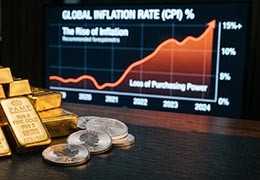
Precious metals prices are predominantly driven by macroeconomic and monetary factors rather than by supply-demand fundamentals in the traditional commodity sense. Gold, in particular, is extremely sensitive to real interest rates — the nominal interest rate minus inflation. When real rates are low or negative, the opportunity cost of holding gold (which pays no yield) is minimal or zero, removing a key argument against ownership and supporting higher prices. Conversely, when real rates rise significantly, gold faces competitive pressure from interest-bearing assets. The US dollar is another primary driver: gold and the dollar have a well-documented inverse relationship, as both compete as global reserve assets and dollar weakness typically boosts gold prices in USD terms while increasing gold's appeal in other currencies. Monitoring inflation data, central bank policy signals, and currency markets provides the essential macro context for any serious precious metals analysis.
Technical Analysis Applied to Precious Metals Markets
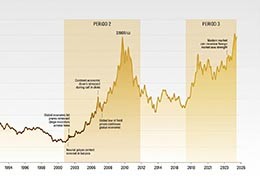
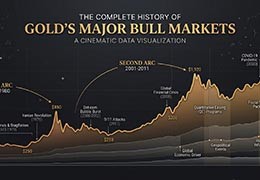
While fundamental and macro analysis drives long-term positioning decisions, technical analysis provides valuable tools for refining entry and exit timing within the framework that fundamentals establish. Chart analysis of gold and silver price charts can reveal important support and resistance levels, trend strength indicators, and potential reversal signals that complement macro analysis. Key technical tools used in precious metals markets include moving averages (particularly the 200-day moving average, widely watched by institutional investors), relative strength indicators, momentum oscillators, and volume analysis. Long-term precious metals charts are particularly instructive, as they reveal multi-decade support and resistance levels, major trend channels, and the visual representation of historical bull and bear market cycles that provide context for current conditions. At GoldMiner.fr, technical analysis is used as a complement to — never a replacement for — fundamental and macro analysis.
Key Indicators Every Precious Metals Investor Should Monitor
Beyond macro fundamentals and technical charts, several specific indicators provide valuable real-time insight into the state of precious metals markets. The Commitment of Traders (COT) report, published weekly by the CFTC, reveals the positioning of commercial hedgers, large speculators, and small investors in gold and silver futures markets — providing a useful contrarian signal when any group reaches extreme positioning. The Gold Miners Bullish Percent Index measures the percentage of gold mining stocks in technical uptrends, offering a sector-level breadth indicator. Gold and silver ETF holdings data shows whether institutional investors are adding or reducing precious metals exposure. Central bank gold buying and selling, reported quarterly by the World Gold Council, signals institutional demand trends. And the gold-to-silver ratio, discussed extensively elsewhere on GoldMiner.fr, remains one of the most powerful allocation signals between the two metals.
Supply and Demand Fundamentals in the Gold and Silver Markets
While macro factors dominate precious metals price determination in the short to medium term, supply and demand fundamentals create the underlying structural backdrop that influences long-term price trends. Global gold mine production — which has been relatively flat or declining in recent years despite higher prices, reflecting the lack of major new discoveries and rising mining costs — provides the supply side of the equation. Demand comes from multiple sources: central bank purchasing (which has been at multi-decade highs in recent years), investment demand through ETFs and physical bullion, jewellery fabrication (primarily in India and China), and industrial applications. For silver, the industrial demand component adds significant complexity, with solar panel manufacturing, electronics, and medical applications consuming growing quantities of metal alongside investment demand. Understanding these fundamental supply and demand dynamics provides important context for assessing whether current precious metals prices are likely to be sustainable or to trend higher or lower over multi-year horizons.
Building an Analytical Process for Precious Metals Investment Decisions
Effective market analysis is not about any single indicator or framework — it is about combining multiple analytical lenses into a coherent, consistent process that informs high-quality investment decisions. At GoldMiner.fr, our analytical process for precious metals markets integrates macro analysis (real rates, dollar, inflation), fundamental supply-demand analysis, technical chart analysis, sentiment indicators, and comparative asset valuation within a disciplined decision-making framework. This process is updated continuously as new data becomes available, and our findings are shared transparently with our subscribers so they can understand not just what positions we hold, but why we hold them and what conditions would cause us to change our views. The goal is not to be right 100% of the time — that is impossible in any market — but to make consistently informed, well-reasoned decisions that compound positively over time.