
Shopping Cart
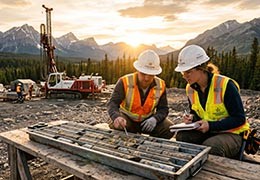
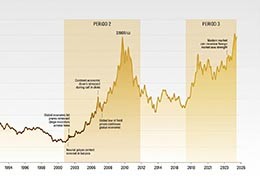
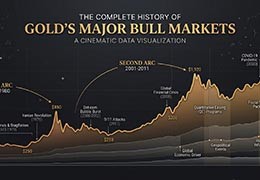
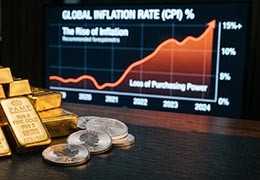




The resource sector — encompassing mining, energy, agriculture, and the full spectrum of natural resource industries — represents one of the most fundamental and enduring investment opportunities available. Every advanced economy, every technological breakthrough, and every improvement in human living standards ultimately depends on the extraction, processing, and distribution of raw materials from the earth. Yet the resource sector is also one of the most cyclical, volatile, and misunderstood areas of the investment universe — prone to dramatic booms and busts that destroy capital for uninformed investors while creating extraordinary wealth for those who understand the cycles. At GoldMiner.fr, our expertise in precious metals and mining stocks extends to a broader understanding of the resource sector that provides vital context for every investment decision we make.
Understanding the Resource Sector: A Cyclical Business Driven by Scarcity
The resource sector is fundamentally cyclical because of a structural imbalance between the speed of demand changes and the speed of supply responses. When commodity prices rise — driven by growing demand, supply disruptions, or both — resource companies benefit immediately, but expanding supply takes years or decades of capital investment. By the time new mines are built, new oilfields are developed, or new agricultural capacity is established, demand conditions may have changed, leading to oversupply and price declines. This cycle of under-investment during low prices, scarcity during recovery, high prices incentivising new investment, and eventual oversupply has repeated throughout history across virtually every resource commodity. Understanding this cycle — and positioning to benefit from it rather than be victimised by it — is the foundation of successful resource sector investing.
Resource Stocks vs Commodity ETFs: Choosing Your Exposure
Investors seeking resource sector exposure face a fundamental choice between direct ownership of commodities (through physical metals, futures, or commodity ETFs) and ownership of the companies that produce those commodities (resource stocks). Both approaches have merit, and the optimal choice depends on the specific resource, the investor's objectives, and current market conditions. Commodity ETFs, including gold ETFs and silver ETFs, provide clean, liquid exposure to commodity price movements without operational risk. Resource stocks — particularly mining and energy companies — provide leveraged exposure, as rising commodity prices amplify company profits through operational leverage. Mining stocks also offer dividend income, growth potential from exploration and development success, and the possibility of acquisition premiums. A comprehensive resource sector strategy typically combines both direct commodity exposure and resource stocks within a thoughtfully balanced portfolio framework.
Global Demand for Raw Materials: The Long-Term Investment Thesis
The long-term investment case for resource sector exposure is rooted in some of the most powerful and durable trends in the global economy. Population growth and rising living standards in emerging markets translate directly into growing demand for metals, energy, food commodities, and other raw materials. The global energy transition requires enormous quantities of specific metals — copper, silver, lithium, nickel, cobalt — that existing production capacity cannot adequately supply. Urbanisation and infrastructure development across Asia, Africa, and Latin America drive sustained demand for construction materials, steel, and industrial metals. And the geopolitical fragmentation of global supply chains is creating new sources of demand for domestic resource production in many countries. These structural demand drivers provide the long-term investment thesis for resource sector exposure that extends well beyond short-term commodity price movements.
Resource Scarcity and Investment Opportunities: The Supply Side Story
While demand drivers are powerful and well-documented, it is often the supply side of the equation that creates the most compelling investment opportunities in the resource sector. Decades of underinvestment during commodity bear markets leave supply pipelines chronically inadequate to meet demand when economic growth and industrial activity accelerate. New mine development typically requires 10–20 years from initial discovery to first production, and faces escalating challenges in permitting, community relations, energy costs, and technical complexity as the world's easiest mineral deposits are progressively depleted. Resource scarcity — the gradual exhaustion of high-quality, accessible deposits — is a long-term structural trend that supports above-trend commodity prices over multi-decade horizons. Investors who identify and position in high-quality resource companies with exceptional assets during periods of sector pessimism can capture extraordinary returns as these scarcity dynamics reassert themselves.
Building a Resource Sector Portfolio: Strategy for Long-Term Investors
Constructing a well-balanced resource sector portfolio requires clear thinking about objectives, time horizon, and risk tolerance. For most investors, the resource sector is best approached as a complement to a broader investment portfolio — providing inflation protection, commodity cycle exposure, and diversification from conventional financial assets, rather than representing a dominant portion of total wealth. Within a resource allocation, diversification across commodity types, company sizes, and geographies reduces concentration risk while maintaining exposure to the broader sector theme. Precious metals (gold and silver) provide the monetary safe-haven foundation; base metals (copper, zinc) and energy metals (uranium, lithium) add industrial demand exposure; and selected royalty companies, streaming companies, and ETFs provide additional diversification and liquidity. At GoldMiner.fr, our resource sector analysis and portfolio strategy is built on the same principles of transparency, expertise, and investor education that define everything we do.