
Shopping Cart









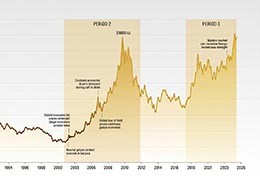

Financial sovereignty is the concept of true independence in wealth management — the ability to control your assets, protect your purchasing power, and make financial decisions free from dependence on any single institution, government, or monetary system. It is the antithesis of a financial life where all wealth is held in bank accounts denominated in a single currency, subject to capital controls, bank bail-ins, inflationary erosion, and the arbitrary decisions of monetary authorities. At GoldMiner.fr, financial sovereignty is not merely an investment philosophy — it is the foundational purpose of everything we teach and advocate. Hard assets — physical gold, silver, and real productive resources — are the building blocks of genuine financial independence.
Why Financial Sovereignty Matters More Than Ever
The concept of financial sovereignty has moved from the fringes of investment philosophy to mainstream relevance over the past two decades. The 2008 financial crisis demonstrated that major financial institutions could become insolvent overnight, threatening deposits and savings that millions of ordinary people had trusted to the banking system. The European debt crisis introduced the concept of "bail-ins" — the confiscation of depositor funds to recapitalise failing banks — into the vocabulary of risk management. Capital controls in multiple countries restricted citizens' ability to move their own money across borders. Negative interest rates in Europe and Japan effectively taxed savings held in bank accounts. And inflation — accelerating in the 2020s to levels not seen in decades — steadily eroded the real value of cash savings. Against this backdrop, the case for financial sovereignty through hard assets has never been more practically compelling.
Hard Assets as the Foundation of Genuine Wealth Independence
Hard assets — physical gold and silver, productive land, tangible commodities — possess characteristics that financial assets fundamentally lack. They cannot be created at will by governments or central banks. They cannot default. They cannot be made worthless by a technological disruption or accounting fraud. Their value is intrinsic rather than dependent on the promises of any third party. Physical gold, in particular, has maintained purchasing power across centuries, through wars, currency reforms, empire collapses, and technological revolutions. This track record is unmatched by any financial instrument in existence. Owning physical gold and silver outside the banking system — held personally or in segregated, allocated private vault storage — provides a level of financial independence that paper assets simply cannot replicate. This is what GoldMiner.fr means by financial sovereignty: real, tangible wealth that cannot be confiscated by bank failure or eroded by monetary policy.
International Wealth Diversification: Spreading Risk Across Jurisdictions
For investors seeking comprehensive financial sovereignty, domestic hard asset ownership is necessary but not sufficient. International wealth diversification — holding assets in multiple jurisdictions — adds a crucial additional layer of protection against country-specific risks including confiscatory taxation, capital controls, or political instability. Precious metals can be held in private vaulting facilities across Switzerland, Singapore, Hong Kong, the United Arab Emirates, and other stable, low-political-risk jurisdictions, providing geographic insurance that purely domestic holdings cannot offer. Multi-currency diversification — maintaining financial exposure across currencies including the USD, EUR, CHF, GBP, HKD, CAD, and AUD — reduces dependence on any single currency's monetary health. These strategies, once accessible only to high-net-worth individuals with teams of advisors, are increasingly practical for informed individual investors armed with the right knowledge and guidance.
Protecting Wealth Against Banking Crises and Financial Repression
Banking crises and financial repression represent two of the most significant wealth-destruction mechanisms that ordinary savers face. A banking crisis occurs when one or more major financial institutions become insolvent, threatening the deposits and financial assets of their customers. Financial repression — a more gradual but equally destructive phenomenon — occurs when real interest rates are deliberately kept below the rate of inflation, slowly eroding the purchasing power of savings held in cash and fixed-income instruments. Both dynamics have become more common and more severe in the post-2008 era of unprecedented monetary expansion and sovereign debt accumulation. The strategic response — maintaining a significant portion of wealth in physical precious metals outside the banking system, combined with exposure to hard asset companies through mining stocks — directly addresses both of these risks and forms the core of the financial sovereignty strategy we advocate at GoldMiner.fr.
Building Generational Wealth With Hard Assets: A Long-Term Strategy
The ultimate expression of financial sovereignty is the ability to build and transmit wealth across generations — to create a legacy that preserves family purchasing power and financial independence regardless of the monetary and political environments that future generations will face. Physical gold and silver have served this purpose for families across every culture and historical period precisely because their value is not contingent on any specific system, institution, or technology surviving intact. A multi-generational hard asset strategy combines physical precious metals as the preservation core with actively managed mining stock investments for growth, and is structured with appropriate legal and tax planning to ensure efficient intergenerational transfer. At GoldMiner.fr, helping our subscribers build and preserve real, lasting wealth — not just maximise short-term returns — is the ultimate measure of success for our 19 years of expertise in precious metals and resource markets.